
Why does the same perfume smell different on different people?
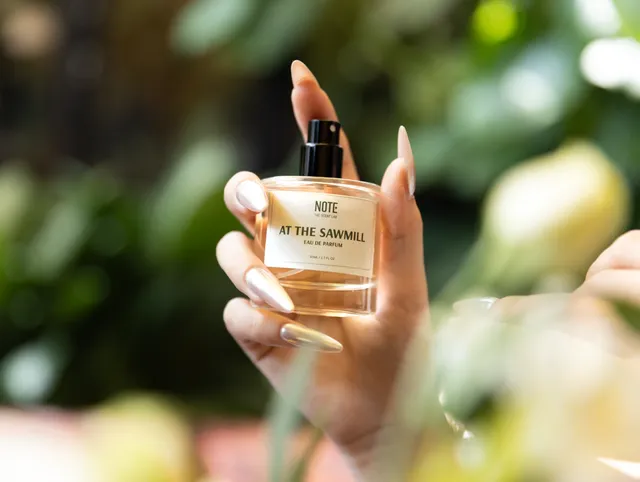
Have you ever caught a wonderful scent on a friend, sprayed that exact same perfume on your own wrist, and found it smelled completely different? The bottle is not playing tricks. The formula is the same on every wrist. What differs is where you smell it from, and what your skin and your own memory do with it.
Smelling yourself vs. Smelling someone else
The first reason is quite simple: it is very difficult to accurately perceive a fragrance on your own skin compared to smelling it on someone else.
When you spray perfume on yourself, your nose is extremely close to the application point. In a short period, your brain naturally gets used to the smell to prevent sensory overload.
From a neurophysiological standpoint, your brain triggers a state called olfactory fatigue (or temporary “nose blindness”). This is a natural self-defense mechanism: the brain automatically blocks continuous scent signals to conserve energy, keeping your nose ready to detect new or potential hazard signals from your environment. As a result, you can no longer clearly perceive the full range of your own fragrance.
On the other hand, when you smell a perfume on someone else, you are standing at a comfortable distance. At this range, you aren’t just smelling the perfume itself—you are taking in a whole “background noise” of scents surrounding them: the fabric softener on their clothes, subtle scents from their diet, or even the air from the environment they just came from. All these details blend with the fragrance, creating an overall impression that you simply can’t replicate when spraying it on yourself.
Skin type: Dry vs. oily skin
Beyond your vantage point, skin structure directly influences how a fragrance projects. Chemically, perfume is a blend of Volatile Organic Compounds (VOCs). How these compounds evaporate depends heavily on the natural oils and moisture levels on your skin.
Dry skin
Lacking a sufficient lipid barrier, dry skin offers no “anchor” to hold onto fragrance molecules. Consequently, perfume evaporates rapidly. Bright, light top notes (like citrus) fade quickly, leaving the scent feeling flat or short-lived.
Oily skin
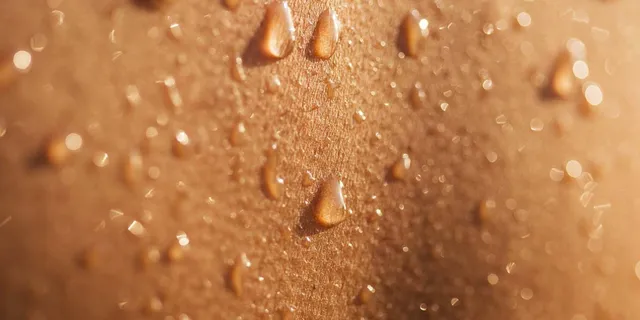
The natural lipid layer acts as an excellent fixative. It helps fragrance molecules cling tighter to the skin, slowing down the evaporation process. This gives deeper base notes, such as woods, musk, or spices, enough time to bloom with clarity, depth, and richness.
Skin chemistry and personal physiology
Everyone possesses a unique biological makeup—ranging from skin pH levels and sweat gland composition to their skin microbiome. Scientists are still working out how each of these changes the way a perfume smells on skin.
The liquid in the bottle stays the same. Your skin is what makes it smell a little different on you.
Personal perception and emotion
Finally, there is the person doing the smelling. The sense of smell is intimately linked to memory, mood, and past experiences.
A single note might feel comforting and warm to one person, yet seem overly sweet or harsh to another. Fragrance is deeply personal, so whether you find a scent “beautiful” or different often comes down to how your brain decodes it.
The next time a perfume smells different on your skin than it does on someone else, there’s no need to wonder if something is wrong with the bottle. It’s simply your perspective, your skin, and your personal perception coming together to create a version of that scent that is entirely your own.