
What Eau de Toilette, Eau de Parfum and Extrait mean
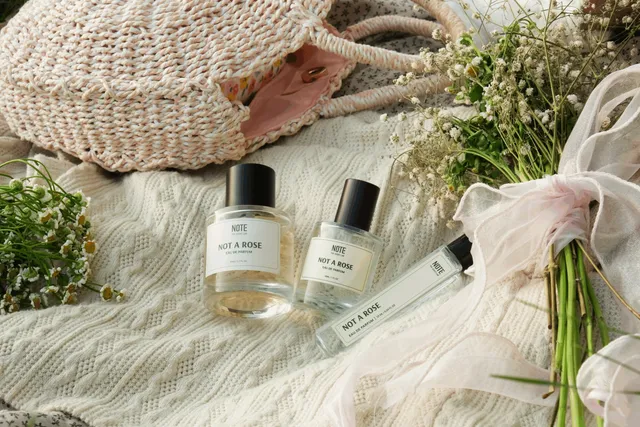
The French words on a perfume label answer one question, which is roughly how much fragrance is in the bottle. They do not tell you whether a perfume is good, and they do not tell you who it is for.
What concentration means
A perfume is fragrance oil dissolved in alcohol, usually with a little water. Concentration is the share of fragrance oil in that mix. The alcohol does the carrying. It lifts the scent off your skin and then evaporates. A higher share of oil gives a denser scent, and a lower share gives a lighter, airier one.
The usual order
From lightest to richest, the names usually run like this.
Eau de Cologne is the lightest. It is fresh and brief, and it is made to be splashed on freely. Cologne is also the name of a fragrance family, which describes the character of a scent, not its strength.
Eau de Toilette is light and bright. It suits daytime and hot weather.
Eau de Parfum is fuller and usually stays longer. It is one of the most common strengths on shelves today.
Extrait de Parfum, sometimes just called Parfum, is the richest. A little is enough, and it tends to stay close to the skin.
What it changes
A higher concentration usually stays longer and smells rounder. A lower one feels cooler and fades sooner. The character can change as well. The Eau de Toilette and the Eau de Parfum of one scent are often two slightly different compositions and not one scent at two strengths, so when a scent comes in both, try each before you choose.
What it does not tell you
These words are a guide and not a measurement. No single rule fixes the numbers behind them, so the same word can mean different strengths from one maker to the next. How long a perfume stays also depends on its notes, on your skin and on the weather. Citrus fades quickly at any concentration, and woods stay longer. The honest test is the same as always, which is to wear the perfume for a day.
Which one to choose
For hot days and close quarters such as an office, a lighter concentration is easier to wear. For evenings and cool rooms, a richer one has more presence. In a hot, humid city you can also keep the richer perfume and simply use fewer sprays. Within one scent, price tends to follow concentration as well, since the richer version holds more fragrance oil.
One more habit
NOTE suggests choosing the scent before the concentration. A scent you love will serve you better than a stronger one you only like.