
Do’s and don’ts when you blend your own perfume
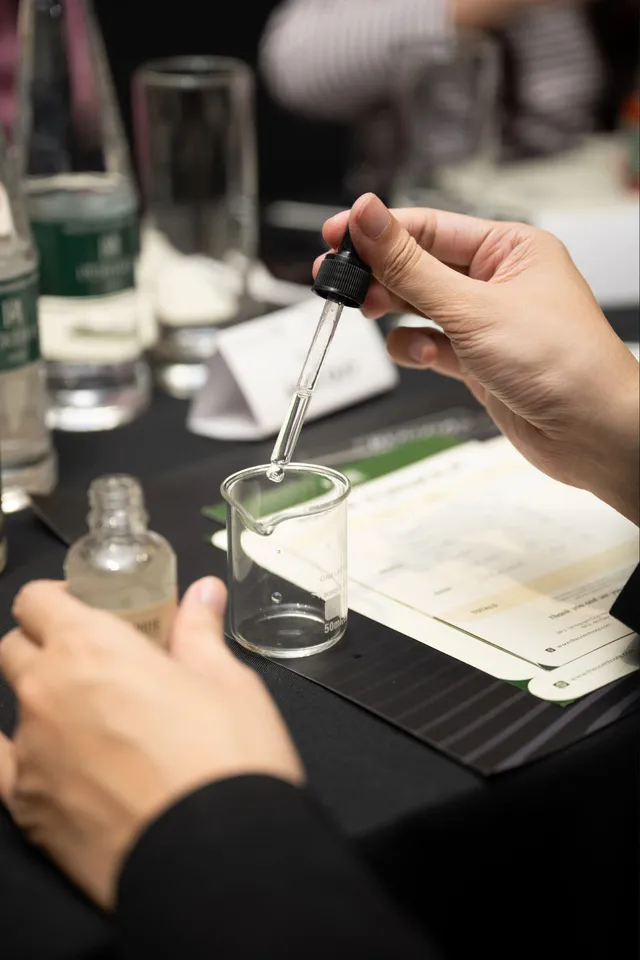
Before you pick up the dropper
At the blending table, you stop being the person who wears a scent and become the person who makes it. An instructor walks you through the steps, but the choices are yours, and so is the bottle at the end.
It helps to arrive knowing how a fragrance is put together and how a session tends to go. The gap between a balanced blend and an overpowering one is usually a handful of small habits.
Do’s at the blending table
Do research basic fragrance families beforehand
Fragrances are sorted into families, such as Floral, Woody, Amber and Cologne. If you already know which family you lean toward, you have a starting point when dozens of accords are lined up in front of you. A few minutes of reading before your session is enough.
Expect a surprise or two. Someone who always buys floral perfumes may find their hand going back to the woody notes once the ingredients are smelled one by one. That is part of the fun, and a little background makes it easier to put a name to what you are smelling.
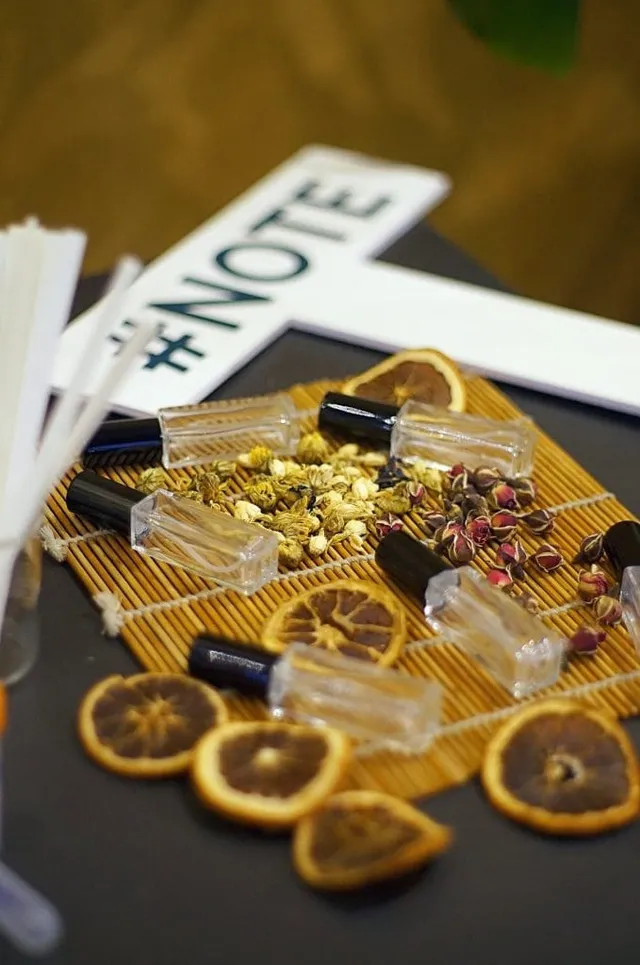
Do listen carefully to your instructor
Your instructor knows which notes get along and which ones fight. Take their advice on proportions and pairings. Even if you arrive with strong preferences, stay open to a suggestion, because an instructor can often tell that a blend is heading somewhere too sweet or lopsided before you have put much time into it.
They can also tell you how a note is likely to change once it is on your skin, which is hard to guess while it is still in the beaker. Ask before you settle on the final blend.
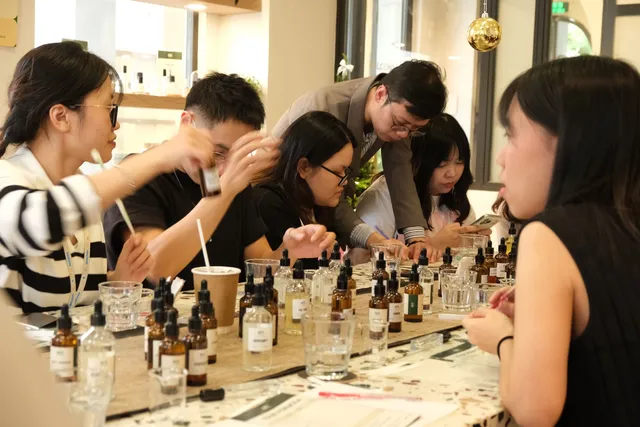
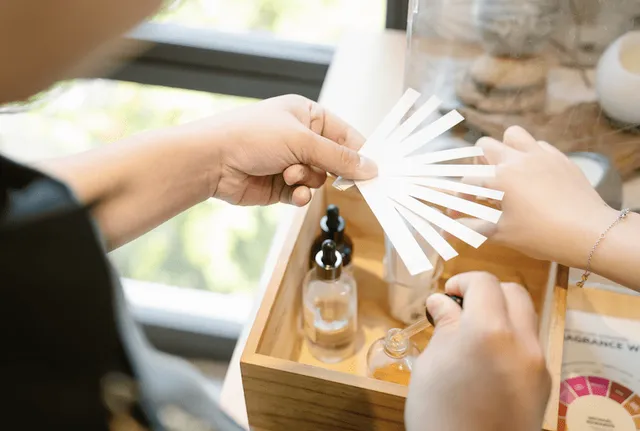
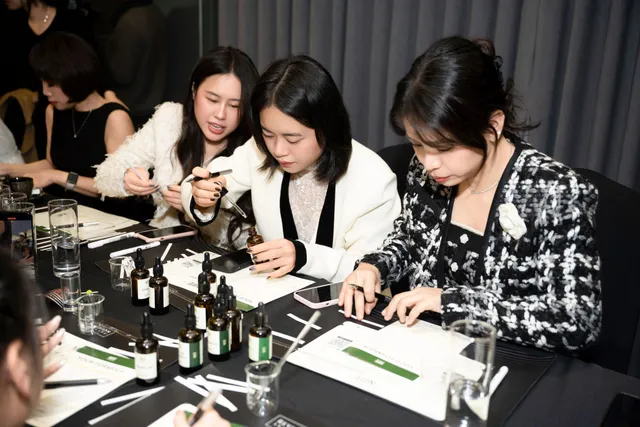
Do test fragrances on paper strips first
Skin has the final say on any perfume, but skin is not where you start. Paper testing strips, also called blotters, let you try far more combinations before your nose gets tired. Narrow the field on paper, then take your favorites to your skin.
Hold the strip a little way from your nose and wave it gently instead of pressing it close. That is nearer to how the scent will reach you, and everyone around you, on an ordinary day.
Do take notes throughout the process
Write down each accord you add and how many drops went in. If the blend turns out well, your notes are the recipe. If it does not, they show you where it went sideways.
Jot down what you smell as well, right after blending and again once the blend has had time to settle. Those few lines tell you what to change on the next try.
Don’ts at the blending table
Don’t add too many drops at once
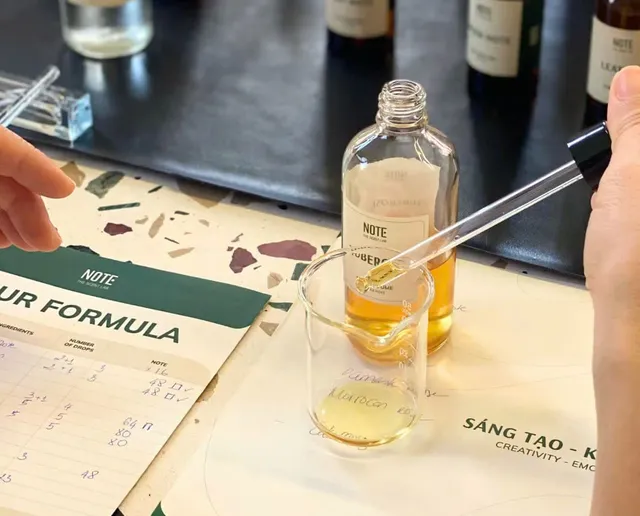
The most common mistake when blending is a heavy hand. You can always add more of an ingredient, but nothing comes back out once it is in. Start with fewer drops than you think you need. With a strong ingredient, one or two are often enough to change the whole blend.
People who blend fragrance for a living sometimes measure in fractions of a drop. Borrow the habit. Add a little, smell the blend, then decide on the next drop. It is surprising how far a single extra drop can move a blend.
Don’t rush the development process
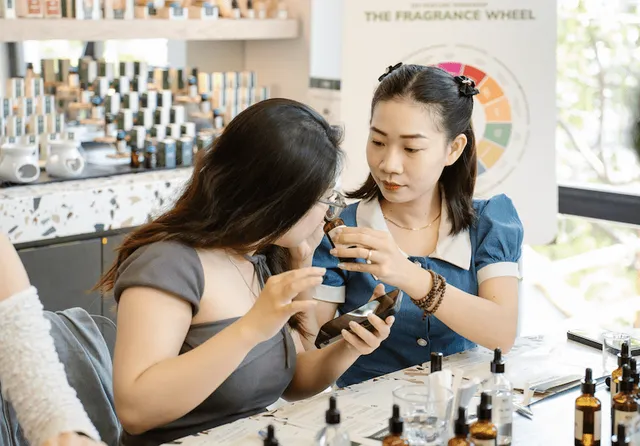
A perfume does not show you everything at once. What you smell right after blending is the Top, the layer you meet straight away. Over the next hour it moves into the Middle, the body of the scent, and over several hours it settles into the Base, the layer that stays longest on the skin. Judge a blend by that early impression alone and you will often be disappointed.
So give the blend a few quiet minutes, and rest your nose while you wait. Step outside for some air or chat with your instructor, and resist going back to the beaker for one more sniff.
Don’t bring too many reference fragrances
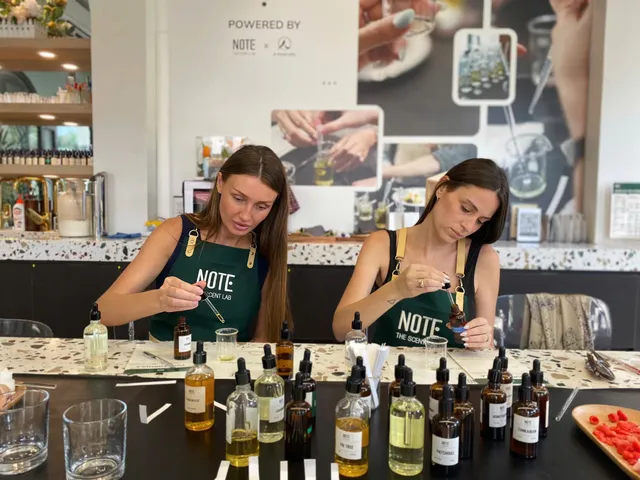
One or two favorite perfumes make useful reference points. A whole bag of them makes it harder to decide. You are there to make a scent that suits you, and a copy of something you can already buy would miss the point.
Instead of a bag of bottles, bring a few words that describe the scents you enjoy: “I love scents with vanilla but find most too sweet,” or “I’m drawn to fragrances that remind me of forest walks after rain.”
Don’t ignore the importance of Base notes
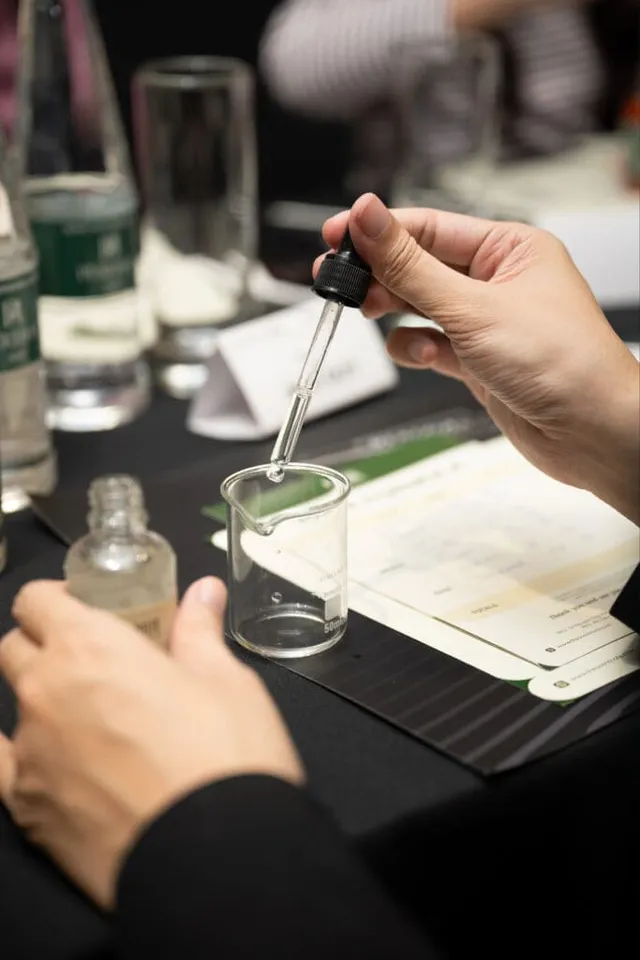
Beginners tend to fuss over the Top notes, the part of the scent that shows up straight away, and give the Base notes less thought. The Base notes decide how long the scent lasts and how it smells hours later, so give them the same care.
Your instructor will help you balance the formula with Base notes such as sandalwood, tonka bean, white musk or amber. Sandalwood is creamy, tonka bean has an almond-and-vanilla warmth, white musk smells like clean cotton and amber is warm and resinous. They are quiet at the start and still there hours later, so do not cut back on them.
Making the most of your blending session
Three more things help once you are in the room.
The clear vision approach
The people who leave happiest tend to arrive with a general idea, not a fixed recipe. Think about when you plan to wear the scent and what mood it should set. A memory you want it to bring back is a good guide too. That gives you a direction and still leaves room for a surprise.
Be patient with your blend
A blend seldom comes out right in one go. Each version teaches you something about the next, so leave yourself room to try again.
Every skin is different
Body chemistry changes how a fragrance develops. A blend that smells great on your friend may smell different on you, so make the final call on your own skin.
Frequently asked questions
How many drops should I add at a time?
Fewer than you think. With a strong accord, one or two drops are often enough, and you can always add more later. You cannot take any out.
Should I bring my favorite perfumes?
Bring one or two as reference points. More than that makes it harder to decide.
Why does my blend smell different after an hour?
Because a perfume moves through layers. The Top is what you smell right after blending. Over the next hour the Middle comes through, and over several hours the scent settles into the Base. Give a blend time before you judge it.
Your signature perfume awaits
The aim of making your own perfume is a scent that feels like you. Keep these do’s and don’ts in mind and you will walk into your session ready to make your own choices.
It might be a scent for every day or one you save for special occasions. It might be a gift. Whichever it is, the workshop gives you the tools and the guidance to turn what you like into something you can wear.
And the next time someone asks what you are wearing, you get to say you made it yourself.

Blending a perfume on your trip
Perfume-making workshops in Ho Chi Minh City
Perfume-making sessions for visitors to Ho Chi Minh City are run by 9base. You blend your bottle from a set of accords with an instructor beside you, and it goes home in your bag as a souvenir of the trip.
Smell is good at holding on to a place. If your trip ends in Ho Chi Minh City, a perfume session is a fine way to spend part of the last day, and the bottle you leave with can bring the trip back each time you wear it. 9base keeps your formula on record when you register it after the session, so it can be made again on your next visit. If you would rather buy a finished scent, see the NOTE - The Scent Lab perfume collection.
To blend a perfume of your own, book a perfume workshop with 9base at https://the9base.com/